Gleamer
Detects subtle anomalies
GLEAMER BoneView can detect subtle anomalies that may be difficult to spot. Results appear in about 2 minutes!
BoneView automates daily work and significantly supports diagnostics in the ED or admissions. A friendly, Polish-language user interface, standard DICOM or GSPS integration and minimal technical requirements make the tool highly cost-effective and functional, while experience gathered in 22 countries results in high sensitivity and specificity.
Gleamer BoneView
Fracture detection
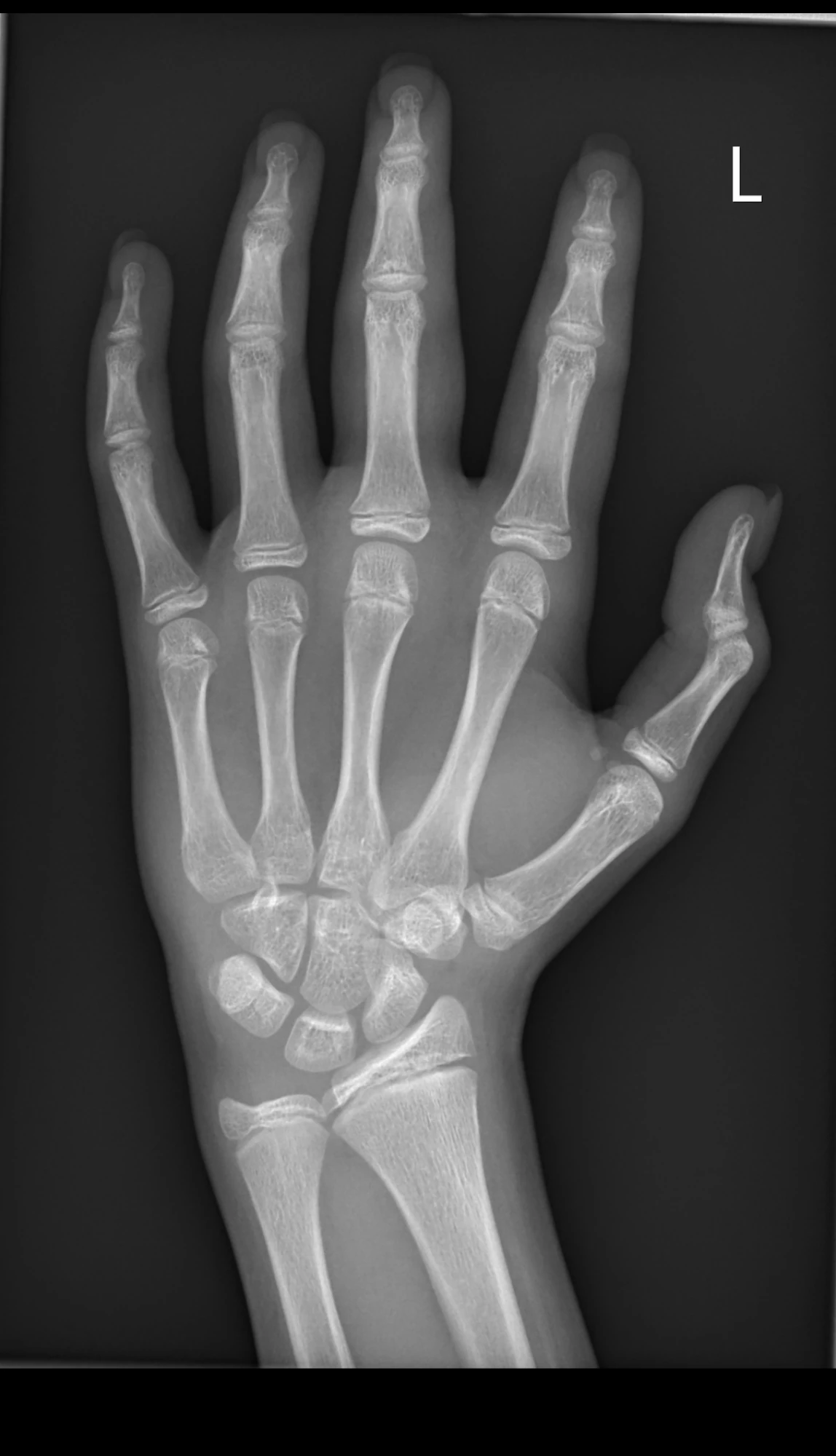
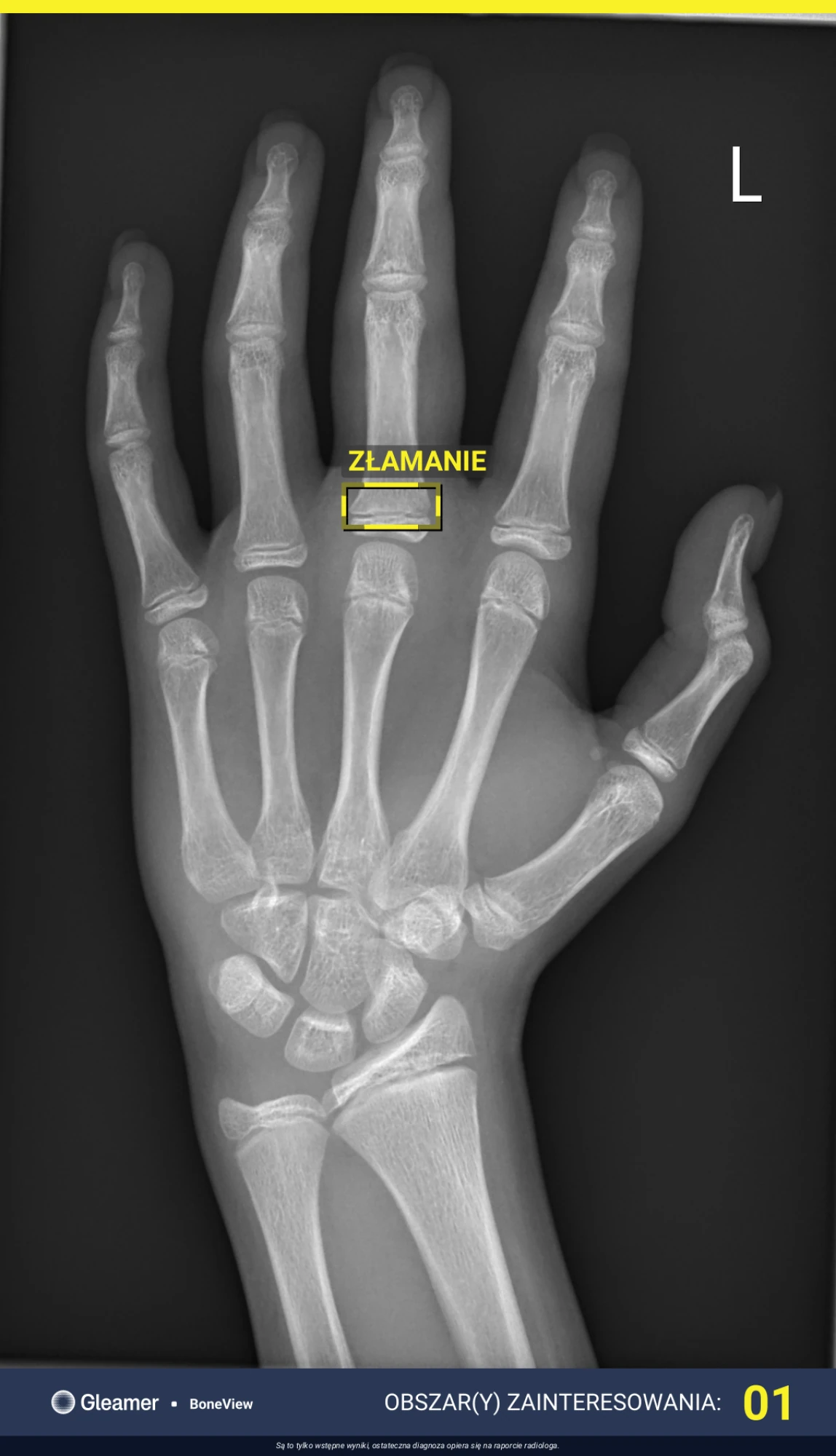
Slide right to see the AI analysis result →
Detects
- Fractures
- Effusions
- Dislocations
- Bone lesions
- Pneumothorax
- Consolidations
Measurements
Automates daily measurements and simplifies interpretation with an easy-to-read interface. Save time, reduce errors and increase accuracy through full automation of routine measurements.
Bone age
The BoneView Bone Age algorithm automates bone age assessment using the Greulich & Pyle atlas method.
Gleamer in numbers
5,000users – radiologists, emergency physicians, radiographers…
500+hospitals, clinics and medical facilities in 22 countries use GLEAMER
What is AI in radiology?
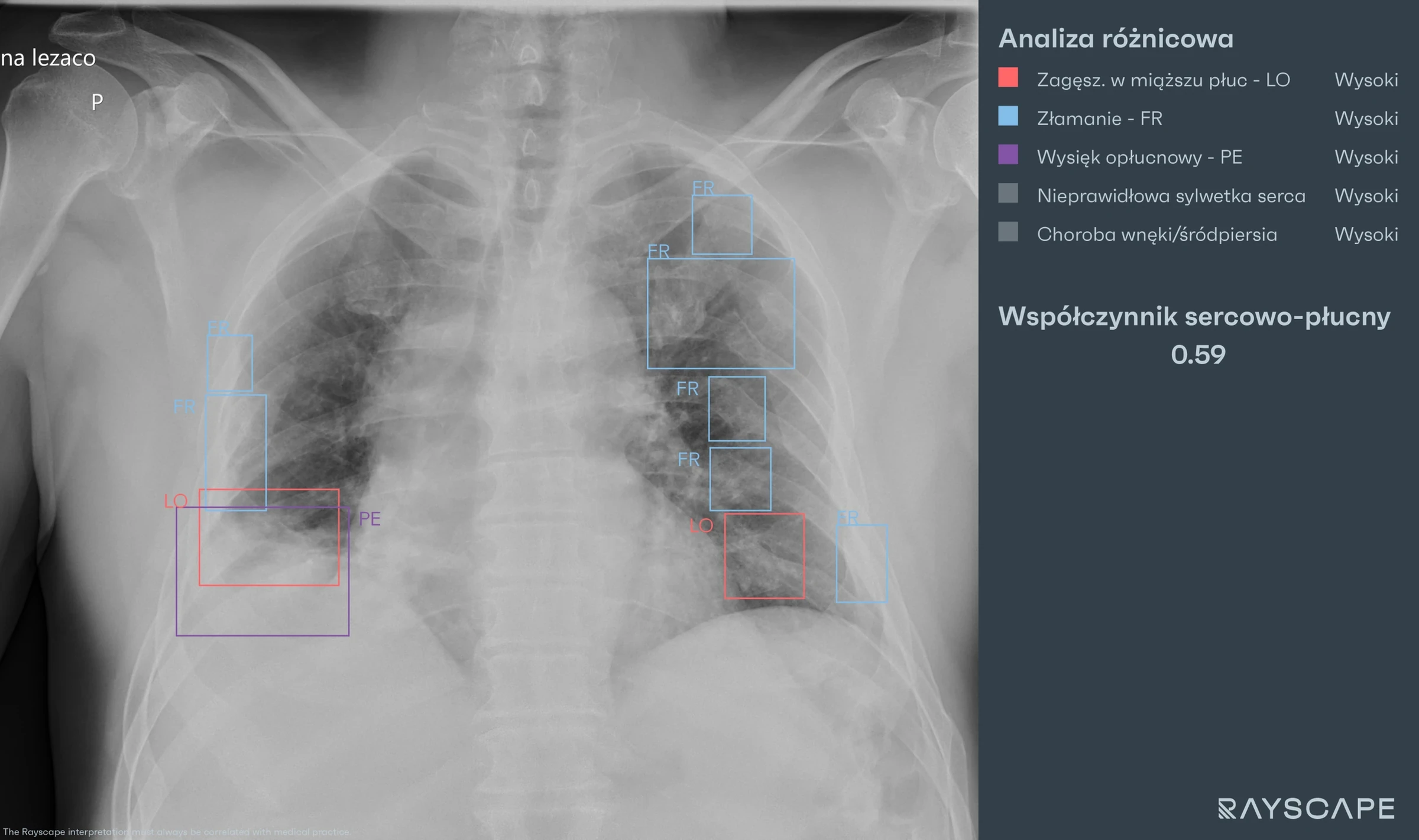
Artificial intelligence in diagnostic imaging automatically analyses X-ray and CT studies and highlights findings for the doctor to review. Gleamer BoneView detects fractures and dislocations, among others; Rayscape analyses chest X-rays and lung CT; and core:line aview systems support COPD, coronary artery calcification and brain haemorrhage analysis. Learn more about Rayscape on the Rayscape manufacturer website.
Who is AI in diagnostic imaging for?
Radiologists
Rayscape results arrive directly in the PACS within a few minutes.
Emergency departments
BoneView supports diagnostics, with results in about 2 minutes.
Lung and heart imaging
Rayscape LUNG CT tracks lung nodules, and aview CAC detects coronary artery calcification.
Benefits of AI in radiology
Shorter time to results
Rayscape cuts time to results by over 30% (based on internal tests).
Subtle findings
BoneView detects subtle anomalies that may be difficult to spot.
Automatic measurements
BoneView automates routine measurements and bone age assessment using the Greulich & Pyle method.
What does an AI deployment in radiology involve?
Gleamer BoneView uses standard DICOM or GSPS integration and has minimal technical requirements. Rayscape results are delivered directly to the physician’s PACS.
If you are also planning an image archive, see the INFINITT PACS system. AI is also part of the REMEDI REMEX-KA6 mobile X-ray module.
FAQ – AI in radiology
How does AI help in radiology?
AI automatically analyses X-ray and CT studies and highlights findings for review, such as fractures, chest pathologies or lung nodules. The diagnostic decision is made by the physician.
How quickly are AI results available?
With Gleamer BoneView, results appear in about 2 minutes. Rayscape sends results to the PACS within a few minutes.
What does Gleamer BoneView detect?
Fractures, effusions, dislocations, bone lesions, pneumothorax and consolidations.
Does the AI integrate with the PACS?
Yes. BoneView uses standard DICOM or GSPS integration, and Rayscape delivers results directly to the PACS.
Do the AI solutions have a Polish interface?
Yes. Gleamer BoneView, Rayscape and core:line are available with a Polish-language interface.
